When a person opens a search engine today, they rarely type a string of fragmented keywords and scroll through ten blue links. Instead, they ask a conversational question, and a generative intelligence reads the web, synthesizes the information, and delivers a single, cohesive answer. This shift from matching strings to understanding meaning has broken traditional search mechanics. Brands that built their entire web presence on ranking for exact-match terms now find themselves invisible to conversational engines. Understanding what is ai search optimization has become the central survival skill for modern digital marketers and content creators.
This transition marks a fundamental rewiring of how information surfaces online. Traditional search engines evaluated web pages by counting backlinks, scanning keyword densities, and indexing specific phrases. Generative search platforms and answer engines evaluate concepts, credibility, authority, and clarity. They do not just index your words. They read your content, evaluate its logic, and decide whether to quote your insights in an synthesized response. Adapting to this new paradigm requires a complete strategy pivot. You must stop writing for simple bots and start writing for intelligent comprehension engines that value depth, structure, and factual integrity over algorithmic keyword repetition.
The Mechanics of Algorithmic Comprehension
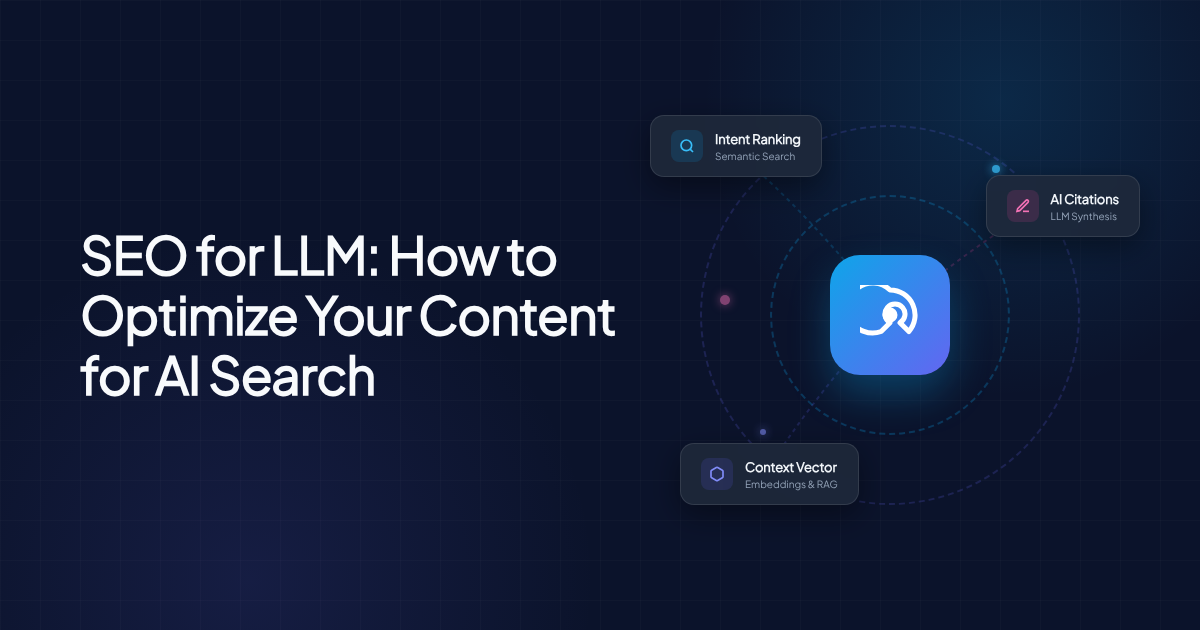
To understand how modern answer engines select sources, you must first look at how they consume data. Traditional search crawlers scraped web pages to build a massive index of words and their locations. Generative engines use advanced language models to turn text into vector embeddings, which are mathematical representations of meaning. When a user poses a complex question, the engine looks for web content whose vector embeddings closely align with the intent behind the query.
This means that keyword placement matters far less than semantic richness. If your article discusses a topic using narrow terminology while ignoring the broader context, related subtopics, and logical nuances, the engine will pass over your site. It prefers sources that thoroughly explore a concept from multiple angles. When evaluating what is ai search optimization, web strategists realize that clarity is the new ranking factor. Content must be structured so that a language model can easily extract definitions, relationships between concepts, and supporting evidence.
Furthermore, these platforms rely heavily on retrieval-augmented generation. When a user asks a question, the system retrieves a handful of trusted web sources in real time, reads them, and synthesizes an original response. If your content lacks clear attribution, structured formatting, or factual precision, the system cannot easily cite it. Winning visibility in these environments means making your site the easiest and most authoritative source for the engine to read and summarize.
Shifting from Keywords to Concepts
For decades, optimization meant finding the exact phrase with high search volume and weaving it into titles, subheadings, and paragraphs a specific number of times. That tactic is rapidly losing effectiveness. Modern engines understand synonyms, context, and user intent far too well for rigid keyword targeting to work alone.
When you write content, you should build semantic webs of related ideas. For instance, an article about commercial real estate should naturally weave in discussions about zoning laws, lease structures, cap rates, and market trends. By covering the surrounding ecosystem of a topic, you signal to generative engines that your domain holds comprehensive expertise. This comprehensive approach forms the core of what is ai search optimization in practice. You are no longer satisfying a strict formula. You are building an authoritative knowledge base that language models recognize as a trustworthy source.
This shift also changes how you structure individual paragraphs. Sentences should flow logically from premise to conclusion, avoiding ambiguity. Vague pronouns, clever metaphors that obscure meaning, and conversational fluff hinder a language model's ability to parse your core argument. Clean syntax and straightforward declarative statements ensure your insights remain intact when an engine summarizes your work for a user.
Establishing Authority and Trustworthiness
Generative engines carry a heavy burden regarding accuracy. Because they often present answers directly to the user without making them click through to a website, they cannot afford to hallucinate or cite unreliable sources. Consequently, trust signals carry immense weight in modern search environments.
Authority is no longer just a matter of accumulating raw backlink volume. While links still matter, the context and credibility of those links define their value. An engine looks at who is referencing your work, whether your brand is consistently mentioned across the broader web, and if your authors have verifiable expertise in their fields. Transparent author biographies, original research, data citations, and clear editorial standards turn a standard blog into an authoritative reference point.
When an engine evaluates conflicting information across the web, it leans toward the source with the strongest corroborating evidence and the clearest domain reputation. Building this reputation requires a long-term commitment to accuracy and depth. You cannot optimize your way into trust through technical tricks. Trust is earned through consistent publication of high-value, factually sound content that other industry actors naturally reference.
Optimizing Technical Architecture for Answer Engines
While content quality dictates whether an engine wants to use your material, technical architecture dictates whether it can easily find and parse it. Generative engines demand clean, accessible web design. If your site relies on complex JavaScript that fails to render properly during a fast crawl, your content effectively does not exist.
Structured data markup plays a massive role in this technical equation. By implementing schema markup, you explicitly tell search systems what your content represents. You define whether a page is a product review, an instructional guide, an organizational profile, or a factual answer. This structured clarity reduces the guesswork for the engine, making it far more likely to feature your data in direct answer boxes or conversational summaries.
Speed and accessibility remain foundational. Clean HTML tags, fast-loading pages, and mobile-friendly layouts ensure that automated systems can ingest your material without friction. When multiple sites offer similar answers to a query, the technical performance and clean formatting of a page often tip the scales in favor of one source over another.
Measuring Success in a Zero-Click Environment
One of the most jarring adjustments for digital marketers is the rise of the zero-click search. Many users find the exact answer they need directly in the synthesized summary provided by the search interface, meaning they never visit the underlying website. Measuring success solely by traditional organic traffic metrics will lead you to false conclusions about your visibility and influence.
Instead, modern measurement requires tracking brand mentions within AI-generated answers, monitoring referral traffic from conversational platforms, and analyzing assisted conversions. You must track how often your brand is cited as the primary source for specific topical queries. If a user reads a synthesized response that cites your research and recommends your brand approach, that exposure carries immense branding value, even if the click did not happen immediately.
Adapting to this environment requires patience. The strategies that build lasting authority in generative search take time to compound. By focusing on deep topical coverage, rigorous factual accuracy, and clean technical execution, you position your digital presence to thrive as search technology continues to evolve.